Wired to Trip: The Scientists and Producers Trying to Build Music That Rewires Your Visual Cortex
Somewhere between a university neuroscience lab in Portland and a DIY warehouse rave in Detroit, a very strange collaboration is happening. Producers with Ableton open on one monitor and peer-reviewed brain scan data on the other. Researchers who show up to experimental electronic shows not to dance, but to take notes. And a growing chorus of artists claiming — with varying degrees of seriousness — that they've figured out how to make you see their music.
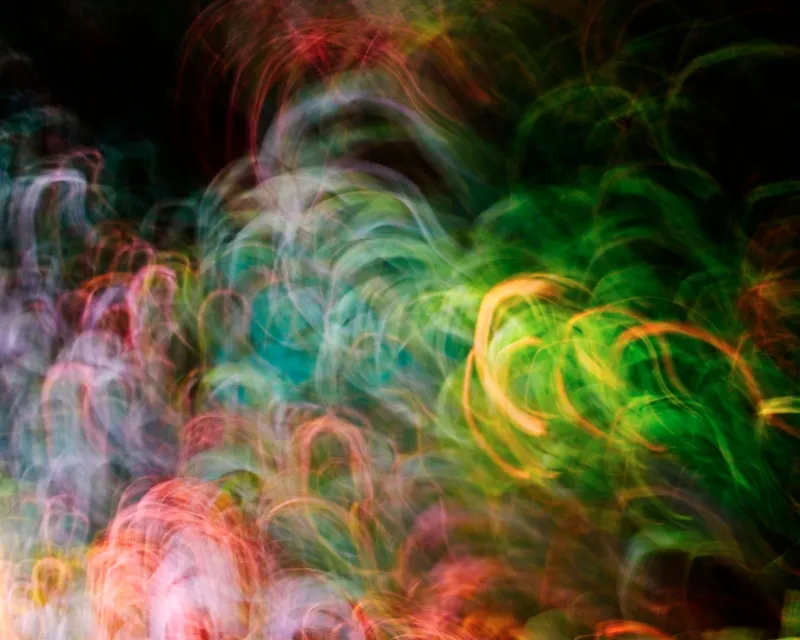
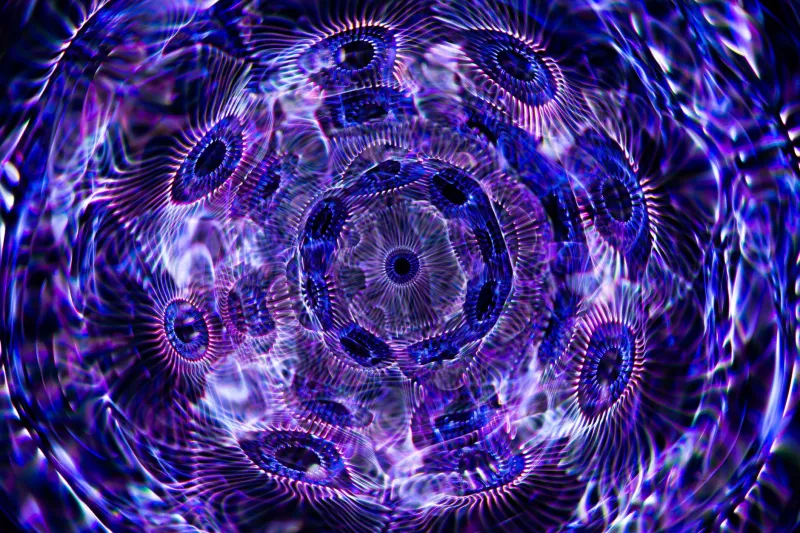
Synesthesia, the neurological phenomenon where stimulation of one sense automatically triggers another, has always been the cool-kid credential in music circles. Jimi Hendrix reportedly saw sounds as colors. Pharrell Williams has talked about it in interviews. It's been name-dropped in artist bios so many times it's practically a cliché at this point. But something different is happening now. Instead of just claiming the condition as a personal quirk, a new generation of experimental and electronic artists is trying to induce synesthetic-style experiences in listeners who were never born with them — using frequency mapping, spatial audio, and immersive tech to hack the gap between your ears and your visual cortex.
Is this legitimate neuroscience? Visionary art? Or the most elaborate marketing mythology the underground has cooked up since "healing frequencies"?
Honestly? It might be all three.
The Science Is Weirder Than the Hype
Here's what we actually know: true synesthesia — the kind where a C-sharp is always, involuntarily, the color burnt orange — affects somewhere between 3 and 4 percent of the population. It's hardwired, consistent, and largely involuntary. You don't choose your color associations; they just show up, every single time, like an uninvited but surprisingly reliable guest.
But neuroscientists have been increasingly interested in what they call "weak synesthesia" or cross-modal correspondence — the way everyone's brain connects sensory information across channels to some degree. Studies out of institutions like Caltech and the University of Edinburgh have demonstrated that most people, when asked, will consistently match low-pitched sounds to darker colors and high-pitched sounds to lighter ones. Fast tempos feel jagged. Slow, reverb-soaked drones feel round. These aren't random. They're patterns embedded in how human brains process sensory input.
That's the crack in the door that producers are kicking wide open.
"Most people think synesthesia is binary — you either have it or you don't," explains one neuroscientist who has been consulting with several experimental electronic artists on what she describes as "cross-modal composition frameworks." "But the reality is more of a spectrum. And when you understand the underlying mechanisms — how certain frequencies activate adjacent sensory processing regions — you can start designing experiences that push people toward the synesthetic end of that spectrum, even temporarily."
In other words: you might not be a synesthete, but the right music, in the right environment, can make your brain act like one for a while.
The Producers Building the Map
In practice, this looks less like a science experiment and more like a really obsessive approach to sound design. Artists working in this space talk about frequency layering with an almost architectural precision — stacking sub-bass tones that activate the body's physical resonance alongside high-frequency shimmer that, according to some research, correlates with visual brightness responses in the brain. They're using binaural beats not as a wellness gimmick but as a structural element, tuning the gap between left and right channel frequencies to hit specific brainwave states associated with heightened cross-sensory perception.
One Brooklyn-based producer, who makes dense, slow-moving electronic music under a name that sounds like a chemistry equation, describes his process as "painting in frequencies I can't actually see." He's been collaborating with a VR developer to build visual environments that are generated in real time from audio analysis — not just reacting to the beat, but responding to specific spectral content in a way that's meant to mirror the involuntary color associations documented in synesthesia research.
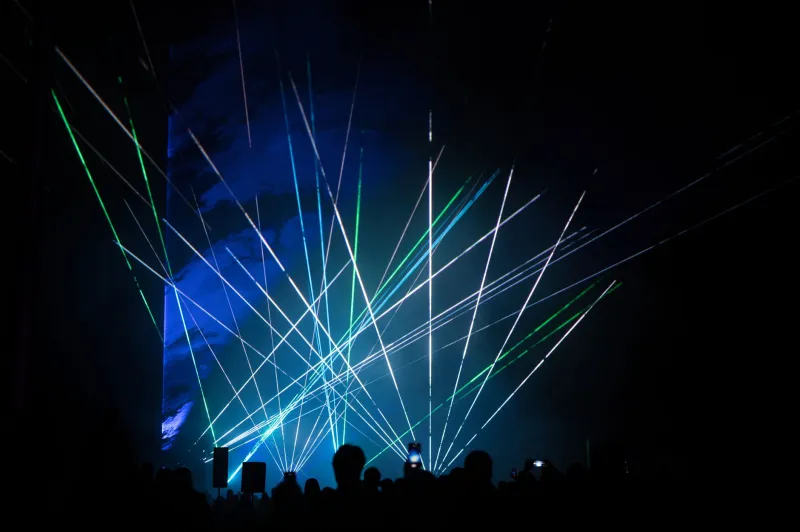
"I spent six months going through studies on chromesthesia — that's specifically sound-to-color synesthesia — and building a visual language based on what the data said," he explains. "Low-end rumble maps to deep indigo and black. High-frequency resonance maps to white and gold. Mid-range harmonics get greens and yellows. When you're inside the dome with the music, your brain starts to fill in the gaps. It starts to feel inevitable."
The "dome" he's referring to is a geodesic projection space he's been testing at a series of invite-only events in the Northeast. Attendees report experiences that range from "really beautiful" to "genuinely unsettling" — which, if you know anything about the history of psychedelic art, is basically the highest possible compliment.
VR as the New Acid Test
The technology side of this conversation is moving fast. Companies developing spatial audio and volumetric VR environments have started pitching their tools explicitly to artists interested in multisensory design. Some of the more interesting work is happening at the fringes — small studios and indie developers who are less interested in gaming applications and more interested in what they call "experiential neurology."
The pitch is seductive: if you can control every variable in a listener's sensory environment — the audio spatialization, the visual field, the lighting frequencies, even haptic feedback through the floor — you can theoretically engineer the conditions most likely to produce cross-modal perceptual experiences. You're not just making an album. You're building a neurological environment.
The skeptics, and there are plenty of them, point out that the leap from "cross-modal correspondence is real" to "I can make anyone experience synesthesia" is a significant one. "There's solid evidence for shared sensory associations," one cognitive neuroscientist told us via email, adding a caveat that he preferred not to be quoted directly on what he called "the commercial appropriation of this research." "But the claim that you can reliably induce synesthetic experiences in non-synesthetes through music production is far ahead of what the evidence actually supports."
Fair point. But then again, the underground has never waited for peer review.
Why This Moment, Why This Scene
It's worth asking why this is happening now. Part of it is technology — spatial audio tools and affordable VR hardware have made immersive design accessible in ways that simply weren't possible five years ago. Part of it is cultural: a post-pandemic audience that spent years in flat, screen-mediated reality is hungry for experiences that feel physically overwhelming and genuinely strange.
But there's something else going on too. The experimental electronic scene has always been drawn to the edges of consciousness — that's basically its founding mythology. What's different now is that the tools to actually investigate those edges scientifically are available, and a new generation of artists is curious enough to use them. The gap between the lab and the rave is narrowing, and what's coming out of that collision is music that doesn't just want to sound good. It wants to rewire something.
Whether it actually does that is almost beside the point. The intention changes the music. The obsession changes the experience. And sometimes, in a dark room with the bass turned all the way up and a dome full of color blooming above you, the distinction between "genuine synesthesia" and "something that feels exactly like it" stops mattering entirely.
Tune in, drop out, and let your visual cortex figure the rest out.