Your Brain on Bass: How Electronic Artists Are Hacking Your Senses With Light
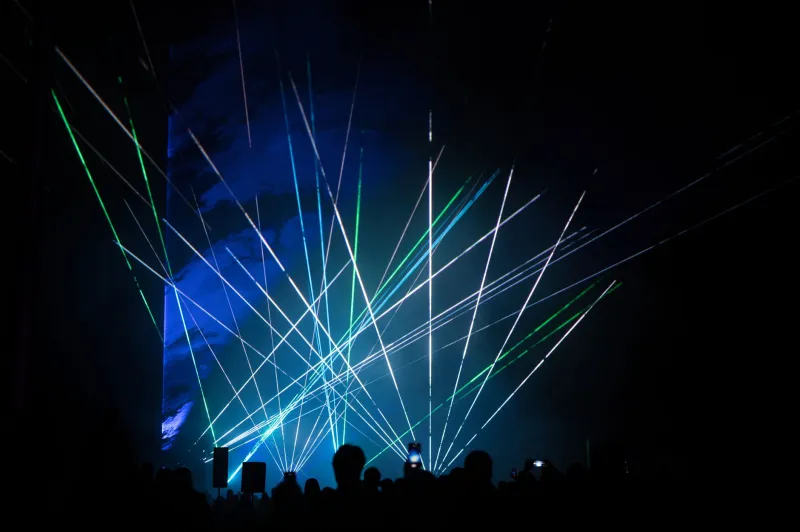
You're standing in a converted warehouse in East Los Angeles. The kick drum hits and, simultaneously, a pulse of amber light slams across your retinas. The synth pad swells and the room bleeds into violet. For a moment — just a moment — you genuinely cannot tell if you heard that color or saw that sound. You look around. Nobody else seems alarmed. Everyone just nods, glassy-eyed, like this is completely normal.
It kind of is now.
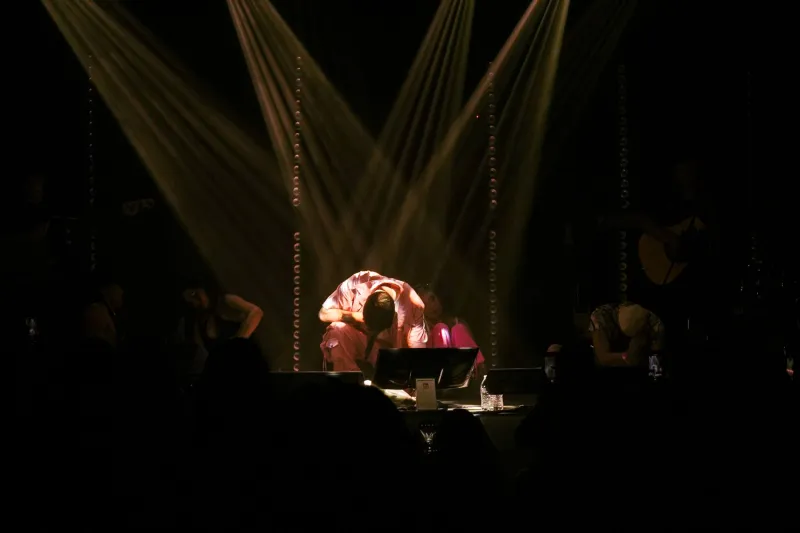
Something seismic has shifted in the American electronic music underground over the last few years. The age of the dark club with a single strobelight is quietly dying. In its place, producers, lighting designers, and visual artists are collaborating to build something closer to a neurological event than a night out — experiences deliberately engineered to blur the line between your senses.
They call it synesthetic design. And whether you think it's transcendent art or very expensive manipulation, it is absolutely working.
What Synesthesia Actually Is (And Why It Matters Here)
Synesthesia, in its clinical form, is a neurological phenomenon where stimulation of one sense automatically triggers an experience in another. Some people genuinely see colors when they hear music. Others taste words. It affects somewhere between 2 and 4 percent of the population, and historically it's been associated with artists, musicians, and — let's be real — people who've had some interesting psychedelic experiences.
But here's what's fascinating: researchers have found that synesthetic-like experiences can be induced in non-synesthetes under the right conditions. Sensory overload, sleep deprivation, rhythmic repetition, and yes, certain substances can all push the brain toward cross-modal perception. Which is basically a clinical way of saying: the right light show can make a regular person feel like they're tripping.
Dr. Melissa Rand, a cognitive neuroscientist at UC San Diego who studies multisensory integration, puts it plainly. "When you synchronize auditory and visual stimuli with enough precision and enough intensity, you start breaking down the brain's normal compartmentalization. The processing bleeds. That's not metaphor — that's measurable neural activity."
Electronic artists are increasingly aware of this. And they're using it deliberately.
The Architects of the Blur
Take Detroit-based producer and live performer Cassiel Voss, who performs under the name Pale Meridian. His live sets are built around what he calls "chromatic scoring" — essentially, composing the light as a simultaneous instrument alongside the music.
"Every frequency in my set has a color assignment," Voss explains. "Sub-bass is deep red, almost infrared. High-end shimmer is white-gold. When I'm building a track, I'm thinking about what the room is going to look like at every moment, not just what it sounds like."
Voss works with a dedicated visual programmer, a role that barely existed in electronic music circles a decade ago. Now it's becoming standard for any touring act with serious artistic intentions. The tools have evolved dramatically — real-time generative visuals, MIDI-synced LED arrays, laser systems that can be programmed to respond to individual stems in a mix rather than just the master output.
"The old way was: here's a strobe, hit it on the downbeat," says lighting designer Tamara Osei, who has worked with several prominent underground acts out of Chicago and Brooklyn. "What we're doing now is more like scoring a film, except the film is happening live in three dimensions and the audience is inside it."
Osei describes spending weeks analyzing the emotional arc of a DJ's set before even touching a lighting board. She maps peaks, valleys, tension points. She thinks about where she wants the audience to feel expansive versus claustrophobic, anchored versus unmoored.
"Good light design should make you feel the music differently," she says. "Not just see it. Feel it."
Gen Z Didn't Invent This, But They're Demanding It
It's worth acknowledging that the marriage of psychedelic visuals and electronic music isn't new. The liquid light shows of 1960s San Francisco, the laser domes of early rave culture, the VJ booths that became standard in clubs through the 90s and 2000s — there's a long lineage here.
But something has shifted with younger audiences. Gen Z attendees, who grew up in an era of algorithmically optimized content and infinite scrolling, seem to have an almost allergic reaction to passive entertainment. They don't just want to listen. They want to be inside something.
Social media has paradoxically fueled this. A great light show is inherently shareable — it photographs beautifully, it creates the kind of visual spectacle that drives Instagram and TikTok engagement. But the artists and designers we spoke to resist the cynical read on this.
"People share it because it's genuinely affecting them," Voss argues. "Nobody posts a video of something that didn't move them. The sharing is just evidence that something real happened."
There's also a cultural thread worth pulling. A generation that came of age during a pandemic, that experienced years of isolation and screen-mediated reality, is now showing up to physical events with a hunger for full-body experience that feels almost desperate. Multisensory design meets that hunger in a way that a standard club night simply doesn't.
The Marketing Question Nobody Wants to Answer
Here's the uncomfortable part of this conversation: if you can engineer a synesthetic experience, you can also engineer consent. You can make people feel things that feel profound but are, in some meaningful sense, manufactured.
Is there a difference between an artist using light to deepen an emotional experience and a brand using light to sell you something?
Tamara Osei doesn't flinch at the question. "Intent matters," she says. "And so does transparency. When it's in service of the music, when it's in service of an emotional truth the artist is trying to communicate — that's art. When it's in service of making you buy another drink or feel loyalty to a brand, that's manipulation. The technique is the same. The ethics are different."
Dr. Rand is slightly more cautious. "I think we should be thoughtful about the fact that these techniques can be used to bypass rational evaluation. That's not inherently bad — art does that. But it's worth knowing that's what's happening."
The line gets blurry when major festival brands start deploying the same visual language as underground artists. When a corporate-sponsored stage at a major US festival uses generative visuals and chromatic scoring, is it honoring the tradition or strip-mining it?
The Experience Is the Point
For now, though, the most interesting work is still happening in the spaces that don't have corporate logos on the walls. Warehouses, art galleries, converted theaters, underground parties where the visual designer is as important as the headliner.
There's something almost alchemical about what the best of this work achieves. Not just music plus lights, but a third thing — an experience that exists in the space between your ears and your eyes, in the neural gap where the brain decides what's real.
Maybe that's why it feels, at its best, less like entertainment and more like ceremony. Less like a night out and more like something you carry home with you, blinking, slightly altered, trying to remember what color the bass was.
You heard it. You saw it. You're still not sure which.
Good.