Ceremony in the Warehouse: America's New Ambient Ritual Underground
The address comes via Signal, usually about forty-eight hours before the event. There's no flyer with a lineup and a ticket link. There's no Instagram story with a DJ's name in neon. Just coordinates, a start time, and a single line of instruction: bring something to lie down on.
This is the ambient ritual underground, and it's happening in cities you'd expect — Brooklyn, Los Angeles, Chicago, Portland — and plenty you wouldn't. It exists at the intersection of several currents that have been building for years: the mainstreaming of psychedelic therapy, the resurgence of experimental electronic music, a widespread cultural hunger for experiences that feel genuinely transcendent rather than just entertaining. What's emerged is something that looks, more than a little, like a new version of Ken Kesey's Acid Tests — updated for 2024, with better speakers and a growing body of neuroscience to back it up.
What Actually Happens in There
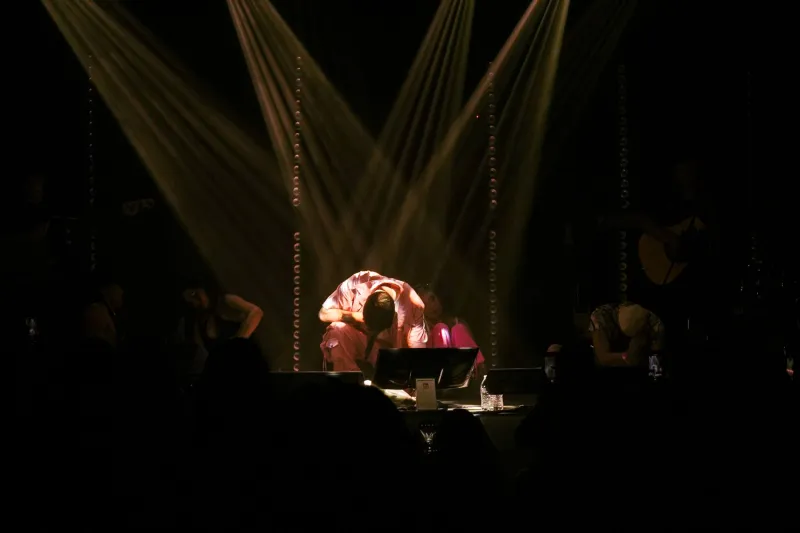
The setup varies by city and by artist, but the broad architecture is consistent. You arrive at an unmarked space — a warehouse, a converted church basement, occasionally a private home with a serious sound system. The lighting is minimal to nonexistent. Floor cushions, yoga mats, and sleeping bags are arranged in concentric patterns around a central speaker array. Sometimes there are eye masks available near the entrance. Sometimes there's a sliding-scale donation suggested. Almost always, there are very clear community agreements posted near the door about consent, noise, and the general understanding that whatever happens in this room stays in this room.
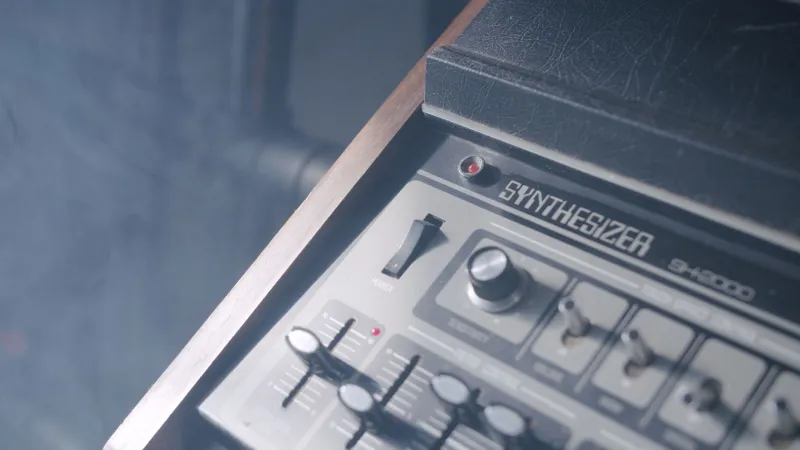
The music, when it starts, is not ambient in the Brian Eno furniture-music sense. It's immersive in a way that's almost physical — long-form compositions built from synthesizer drones, processed field recordings, binaural textures, and sub-bass frequencies that you feel in your sternum before you hear them. Sets run anywhere from forty-five minutes to four hours. Nobody dances. Most people lie down within the first fifteen minutes.
"The goal is dissolution," says one producer who organizes events in the Bay Area and asked to be identified only as Selene. "Not in a scary way. In the way that meditation talks about ego dissolution — that moment where the boundary between you and the sound stops being obvious. That's what we're building toward."
The Ketamine Question
It would be dishonest to write about these spaces without addressing the substance dimension, so let's address it directly. Ketamine is present in some of these environments. Not universally, not always openly, but present — and in some cases, intentionally integrated.
This reflects a broader cultural shift. Ketamine-assisted therapy has moved from fringe to mainstream with remarkable speed. Ketamine clinics have opened in strip malls across America. The FDA has approved esketamine (Spravato) for treatment-resistant depression. The therapeutic framework around the drug — the idea that a carefully curated sonic and physical environment dramatically shapes the quality and content of a ketamine experience — is increasingly well-documented in clinical literature.
The underground ambient spaces are, in a sense, applying that framework outside clinical settings. Some organizers are explicit about this, describing their events as "integration spaces" or "ceremonial environments." Others are more circumspect. All of them are navigating genuinely complicated legal and ethical terrain.
"We don't provide anything," Selene says carefully. "What people bring with them is their own business. What we provide is the container — the sound, the space, the intention. A good container changes everything about what happens inside it."
The container metaphor is one that comes up constantly in these communities, borrowed from therapeutic and shamanic traditions. The idea is that set and setting — to use Timothy Leary's foundational framing — are not incidental to a psychedelic experience but constitutive of it. The music isn't background. It's architecture.
The Artists Building the Architecture
The producers creating music for these spaces occupy a genuinely unusual position in the experimental music ecosystem. They're not making albums in the traditional sense, though many release recordings on Bandcamp. They're not performing in the conventional sense either — there's no stage, often no visible performer at all, just a laptop and an interface tucked in a corner.
What they're doing is closer to what composers like Pauline Oliveros called "deep listening" — creating sonic environments designed to alter perception, encourage introspection, and dissolve habitual modes of hearing. The influences they cite span decades and disciplines: Iannis Xenakis's spatial audio experiments, the drone works of La Monte Young, Harold Budd's collaborations with Eno, the field recording traditions of Chris Watson, and the therapeutic sound bath practices increasingly common in wellness spaces.
Jordan K., who produces under the name Pale Cartography and has been running events in Detroit for three years, describes his compositional process as essentially therapeutic design. "I'm thinking about the arc of a session the way a therapist thinks about the arc of a session," he says. "There's an opening, a deepening, a peak, and a very deliberate return. The music has to hold people through all of that."
His sets typically begin with high-frequency, relatively sparse textures — sounds that encourage the nervous system to settle — before gradually introducing lower frequencies and denser harmonic content as the session progresses. The return is marked by a slow brightening, a gradual reintroduction of recognizable musical elements, something that functions almost like a hand extended to help you back to the surface.
Counterculture with a Wellness Veneer
It's worth sitting with the tension at the center of all this. These events are, in some ways, deeply countercultural — operating outside legal frameworks, resisting commodification, building community through secrecy and trust rather than marketing. But they're also swimming in the language and aesthetics of the contemporary wellness industry, which has its own complicated relationship with accessibility and class.
Most of the events we heard about are sliding-scale or donation-based, and organizers are generally thoughtful about accessibility. But the cultural literacy required to find these spaces — the Discord connections, the trusted friend who vouches for you, the familiarity with the therapeutic psychedelic conversation — is its own kind of barrier.
Still, what's happening in these warehouses feels like something genuinely new being assembled from very old parts. The impulse to use music as a technology for consciousness is as old as human culture. The specific form it's taking right now — synthesizers, spatial audio, post-clinical psychedelic frameworks, radical intimacy — is entirely of this moment.
Ken Kesey would probably find it a little too earnest. He'd probably show up anyway.