Feel the Frequency: How a New Wave of Producers Is Turning Sound Into Something You Can Physically Touch
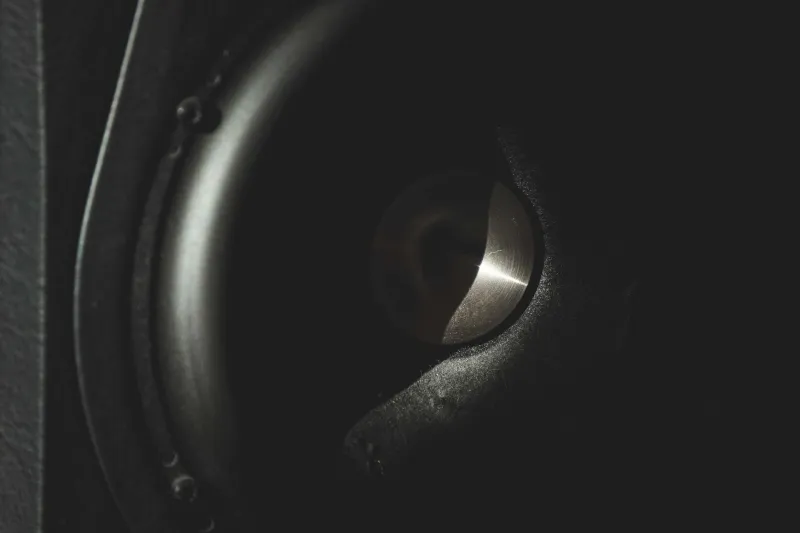
There's a moment — if you've ever stood close enough to a serious subwoofer rig — where the music stops being something you hear and becomes something you are. Your chest cavity becomes a resonator. Your teeth hum. The boundary between you and the sound system gets real fuzzy, real fast. For most producers, that moment is a happy accident. For a growing underground of experimental artists scattered across cities like Portland, Chicago, and Brooklyn, it's the entire point.
They're calling it tactile audio. Haptic soundscaping. Somatic synthesis. The names vary depending on who you ask, but the obsession is consistent: these producers want to make music you can physically feel in ways that go way beyond a booming kick drum. We're talking vibration synthesis tuned to specific nerve clusters, ultrasonic frequencies that interact with your skin's mechanoreceptors, and biofeedback loops that let the room respond to your body's own electrical signals. It sounds like science fiction. It's happening in warehouses right now.
The Body as an Instrument
Arizona-based producer and sound designer Mara Velasco — who performs under the name Periphery Static — got into haptic audio after a frustrating realization: most of her audience was listening to her ambient work on earbuds while doing other things. "I wanted to make something that was impossible to multitask through," she explains. "Something that demanded your entire nervous system."
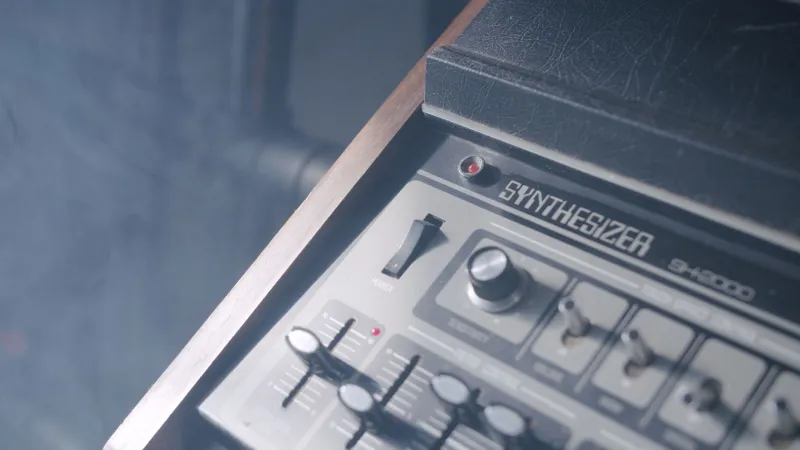
Her setup involves a network of bass shakers — transducers that mount directly to surfaces like floors, chairs, and even custom-built platforms audience members stand on — synced to a modular rig running Eurorack oscillators tuned below the threshold of conventional hearing. "There are frequencies your ears can't process but your body absolutely can," she says. "Somewhere between 20 and 40 Hz, your vestibular system starts getting involved. You feel disoriented, weightless, sometimes emotional in ways you can't explain. That's the sweet spot I'm working in."
Velasco's live performances — intimate, invitation-only affairs held in repurposed industrial spaces — have developed a cult following in the Southwest. Attendees describe sensations ranging from mild tingling to full-body warmth to what several have called "a feeling like being held by something that isn't there." Nobody's complaining.
Ultrasound and the Invisible Touch
On the more technologically ambitious end of the spectrum, a Brooklyn collective called Null Membrane has been experimenting with phased ultrasonic arrays — grids of speakers operating above 20kHz that, when focused correctly, can create localized pressure points in mid-air. The technology, originally developed for medical imaging and industrial cleaning, has been quietly adopted by a handful of experimental artists and researchers who recognized its potential for immersive performance.
"It's basically acoustic levitation tech repurposed for emotional manipulation," says Null Membrane's Dex Okafor, only half joking. "You can create the sensation of something touching your face, your hand, your shoulder — without anything physically making contact. When you layer that with low-frequency drones and spatial audio, people genuinely lose track of where their body ends and the room begins."
Okafor is quick to note that the rig isn't cheap or simple — the array alone runs into five figures, and calibrating it for a specific space takes hours. But the results, he argues, justify the investment. "We did a show in Bushwick last fall where we had people crying within the first ten minutes. Not because the music was sad. Because they felt something they'd never felt before and didn't have language for it."
Biofeedback Closes the Loop
If vibration synthesis and ultrasonic arrays represent the output side of tactile audio, biofeedback technology is closing the loop from the other direction — turning the audience's own physiological responses into part of the composition itself.
Chicago producer Lena Solis, who records and performs as Dermis, builds performances around wearable biosensors distributed to audience members at the door. The sensors track galvanic skin response, heart rate variability, and muscle tension, feeding that data back into her modular system in real time. As the crowd's collective stress levels shift, the harmonic content of the music shifts with them. When tension rises, the drones thicken and detune. When people relax, the system opens up into something airier and more melodic.
"The audience is literally writing the set with me," Solis says. "I'm not performing at them. We're making something together through our nervous systems. It's the most intimate thing I've ever done artistically, and also the most terrifying, because I genuinely don't know what's going to happen."
Solis is also collaborating with a neuroscience researcher at the University of Illinois on a longer-term study tracking how repeated exposure to biofeedback-driven haptic audio affects participants' baseline stress responses and sensory perception thresholds. Early results, she says, suggest that regular attendees are developing measurably greater sensitivity to low-frequency vibration — their bodies, in effect, learning a new way to listen.
Why This Matters Beyond the Fringe
It'd be easy to dismiss all of this as high-concept niche art for people who already own too much Eurorack gear. But the implications ripple outward in interesting directions. Accessibility advocates have been pushing for years for concert experiences that serve deaf and hard-of-hearing audiences — and tactile audio, when designed thoughtfully, offers a genuinely different pathway into music that doesn't require hearing at all. Several of the artists working in this space have actively pursued partnerships with deaf arts organizations, designing performances specifically around vibrotactile perception.
There's also a mental health angle that's hard to ignore. Somatic therapists have long understood that the body holds stress and trauma in ways that purely cognitive approaches can't always reach. The idea that carefully engineered sound environments might offer a new, non-clinical pathway into somatic regulation is attracting attention from therapists, researchers, and wellness practitioners who'd normally have zero overlap with the experimental music underground.
And then there's the pure, uncut weirdness of it — which is, let's be honest, why most of us are here. The notion that a producer in a Portland warehouse can make a room full of strangers feel phantom hands on their shoulders, or synchronize forty people's heartbeats without them realizing it, or build a piece of music that your skin understands before your ears do — that's the kind of thing that makes you question some pretty basic assumptions about what music is and what it's for.
The Trip Is the Point
Mara Velasco puts it simply: "People come to shows already knowing how to listen. I want to teach them how to feel. Those are different skills, and most of us have spent our whole lives only developing one of them."
That's the conspiracy, if you want to call it one. Not a shadowy cabal, just a loose network of obsessive, under-resourced, deeply weird artists who've decided that the ears have had a monopoly on music long enough. They're coming for the rest of your body next. And honestly? Let them.