Empty Space Is the Drug: How Minimalist Producers Are Making Silence Hit Harder Than Any Drop
There's a moment in Nia Vessel's latest track — a 22-minute piece she released without a title, without artwork, and without a streaming link — where the music just stops. Not fades. Not transitions. Stops. And then, about four seconds later, a single sine wave returns, lower and lonelier than before, and something in your chest rearranges itself.
That's not a production accident. That's the whole point.
Across basements in Detroit, converted garages in Portland, and home studios in Albuquerque, a loose constellation of experimental producers is doing something that feels almost countercultural in 2024: they're removing things. Reverb tails, harmonic density, rhythmic complexity — gone. What's left behind is music that breathes differently, that makes your nervous system lean in rather than get blasted back.
And weirdly? It's more psychedelic than almost anything else out there right now.
The Maximalism Hangover
To understand why silence has become the new signal, you have to understand what we've been swimming in. The last decade of electronic music — festival EDM, hyperpop, even a lot of so-called ambient — has trended toward density. More layers, more motion, more stuff. Streaming platforms reward tracks that hook in the first eight seconds. Social media rewards spectacle. The result is a sonic landscape so saturated that your brain essentially stops distinguishing between sounds and starts treating the whole mix as wallpaper.
That's the maximalism hangover. And some producers are done nursing it.
"I got to a point where I was adding reverb to reverb," says Marcus Fole, a Chicago-based producer who releases music under the alias Pale Threshold. "I'd open a session from six months ago and there'd be 40 tracks and I genuinely couldn't tell you what half of them were doing. And the music felt like nothing. It felt like screaming into a pillow."
Fole spent three months last year making music with a single constraint: no more than three simultaneous audio elements at any time. The resulting EP, which circulated as a private Bandcamp link before getting picked up by a small Berlin label, became one of those word-of-mouth things that passes between people who care deeply about sound. It's not quiet exactly. It's deliberate.
What Psychedelia Actually Is
Here's where it gets interesting, philosophically. Psychedelic music has always been understood through its maximalist expressions — swirling guitars, layered drones, massive reverb caves, walls of frequency. The assumption is that altered-state music should mirror the overwhelming quality of the experience itself.
But that framing might be completely backwards.
Neuroscientists studying psychedelic states have noted that one of the core experiences is heightened sensitivity — a lowering of perceptual thresholds where ordinary stimuli become extraordinary. Colors get brighter. Textures become overwhelming. A single note can feel like a universe.
If that's the actual phenomenology of the experience, then dense maximalist music isn't mirroring psychedelia — it's competing with it. Minimal music, by contrast, gives each sound room to become everything. A single bass tone with no harmonic interference becomes genuinely strange. Silence between notes creates a kind of perceptual anticipation that feels almost pharmaceutical.
"You're not building the hallucination," says Vessel, reached by email from her home studio in New Mexico. "You're building the conditions for the listener's brain to build it themselves. The less I give them, the more they have to fill in. And what they fill in is always weirder than what I could've put there."
The Gear (Or Lack Of It)
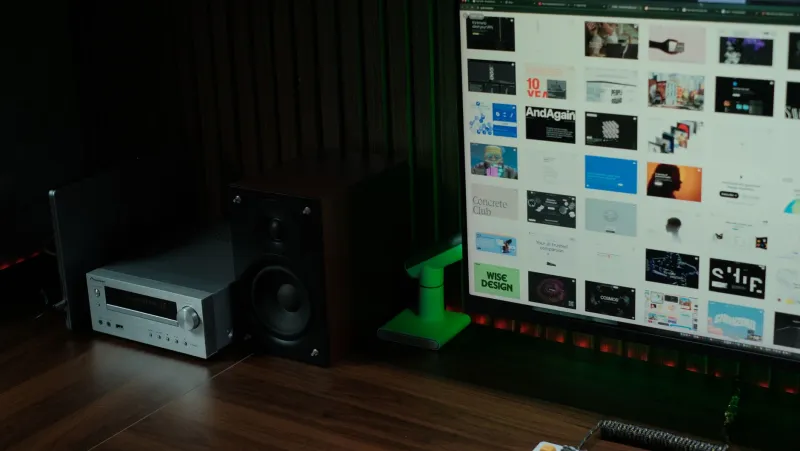
There's also a practical dimension to this movement that ties directly to the underground's material conditions. Minimal production doesn't require a $3,000 plugin suite or a treated room full of outboard gear. Some of the most striking work in this space is being made on single oscillators, basic DAWs running on older laptops, or even just field recorders and a few hardware effects.
Producer and sound artist Deja Colt, who operates out of a converted garden shed in Oakland, works almost exclusively with a single-oscillator modular setup and a reel-to-reel tape machine for degradation. "There's a freedom in limitation that I think people underestimate," she says. "When you can't hide behind complexity, every single choice becomes critical. You can hear every decision. That's scary, but it's also where the music gets honest."
Honesty, in this context, means something specific: the absence of production as disguise. When you strip the flourish, what's left is either something or nothing. And the producers doing this work seem genuinely unafraid of finding nothing — which is, arguably, its own kind of radical.
Silence as Political Act
It would be a mistake to read this only as an aesthetic trend. There's a political dimension to quietness in a culture that has commodified noise.
Attention is the resource that late-stage platform capitalism most aggressively extracts. Every streaming service, every algorithm, every brand activation is competing for the same neurological real estate. Loud, busy, hook-forward music is the sound of that competition. It's engineered to win the scroll.
Music that refuses to compete — that asks you to sit with four seconds of silence and actually listen — is, in a small but real way, opting out of that economy. It's not scalable. It doesn't go viral. It can't be used in a thirty-second ad without losing everything that makes it work.
"I have basically no streaming numbers," Fole says, without particular distress. "But the people who find it — something happens for them. That's enough. That's actually more than enough."
Where This Goes
It's probably too early to call this a movement with a name or a manifesto. It's more like a shared intuition spreading through the underground's network of Discords, Bandcamp rabbit holes, and small-run tape releases. The producers doing this work don't necessarily know each other, don't share a scene in any geographic sense, and wouldn't all describe what they're doing the same way.
But the convergence is real. Something is pulling experimental artists toward the stripped edge, toward the place where music and silence become genuinely indistinguishable — and where that indistinguishability turns out to be the most disorienting, mind-bending thing you can put in someone's ears.
The loudest thing in the room might just be the thing that isn't there.