Build It Yourself or Don't Come At All: The Underground Venues Rewriting the Rules of the Live Experience
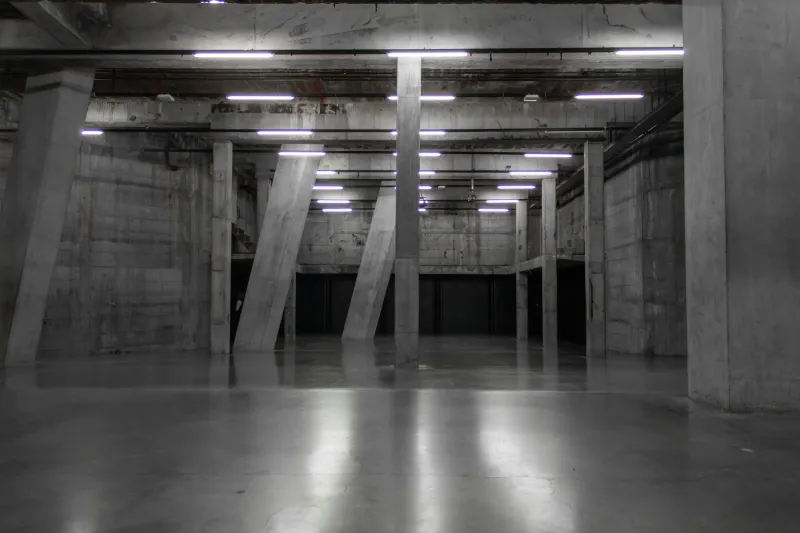
Somewhere in an industrial stretch of East Los Angeles, behind a door with no sign and an address distributed only via a Signal group with a rotating membership of about 300 people, there is a room that will rearrange your relationship with sound.
The ceiling is hung with 48 individually addressable speakers. The floor is covered in a material that transmits low-frequency vibration. The lighting system — built from scratch over eight months by three people with no professional AV background — responds to audio input in real time, not with pre-programmed light shows but with genuine algorithmic improvisation. There is no bar. There is no merchandise. There is no opening act. There is just the music, the room, and whatever happens when they interact with each other and with you.
The people who built it don't want it named. They're not being precious — they're being practical. The space operates in a legal gray area that requires a certain amount of deliberate obscurity to survive.
This is what the new DIY venue movement looks like. And it's happening in cities across America with a momentum that the traditional nightlife industry is entirely unprepared for.
Why the Old Infrastructure Stopped Working
To understand why artists are building their own spaces, you have to understand how badly the existing venue ecosystem serves experimental music.
The economics of traditional clubs are built around alcohol revenue. A venue needs to sell drinks to survive, which means it needs crowds large enough to hit bar minimums, which means it needs music that draws those crowds, which means it needs music that's broadly accessible and doesn't challenge people in ways that might make them leave. Experimental, psychedelic, and immersive electronic music — the kind that asks for extended listening, physical stillness, or genuine sonic disorientation — is structurally incompatible with that model.
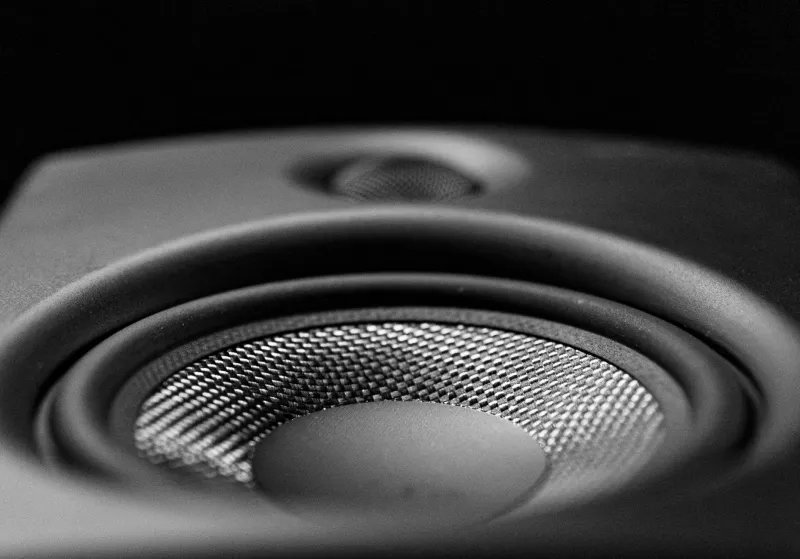
The sound systems don't help either. Most mid-sized American venues run PA systems optimized for vocal projection and live band clarity. They're not designed for the kind of spatial audio, sub-bass extension, or precise stereo imaging that experimental electronic music requires. Playing a carefully crafted immersive piece through a system designed for cover bands is like projecting a film onto a wrinkled bedsheet.
"I played a venue in Denver that had a great reputation," says Tomás Reyes, who performs as Hollow Cartography and has been touring DIY spaces for three years. "The promoter was great, the crowd was great. But the room was wrong. Every time I tried to create space in the music, the PA filled it with its own noise. I basically couldn't do what I do."
That experience — multiplied across hundreds of artists and dozens of cities — is what's driving people to build.
What They're Building
The spaces themselves vary enormously in scale, permanence, and technical sophistication, but they share a common design philosophy: the room is built around the music, not the other way around.
In Detroit, a collective called Mycelium Sound has spent two years converting a 4,000-square-foot former machine shop into what they describe as a "listening architecture" — a space where the acoustic treatment, speaker placement, and visual environment are all considered as a unified system. They've installed a custom speaker array using components sourced from professional touring rigs and DIY audio forums in roughly equal measure. The room can be reconfigured between events, with moveable acoustic panels that let them tune the space to different artists' requirements.
"We spent probably $60,000 on the room over two years," says one of the collective's founding members, who goes by Sable. "That sounds like a lot, but a commercial venue buildout for the same square footage would be half a million minimum. We just did it ourselves, slowly, with people who knew things and people who were willing to learn things."
In Chicago's Pilsen neighborhood, a smaller operation called Threshold runs what they call "event architecture" — temporary immersive installations built inside rented industrial spaces for single-night or weekend events. They own their speaker system, their lighting rig, and a collection of structural elements — fabric baffles, modular walls, custom-built furniture — that get transported, assembled, and disassembled for each show. The space is different every time, but the quality of the sonic environment is consistent because they control every variable.
"A traditional venue is someone else's permanent decision," says Threshold co-founder Amara Osei. "We make new decisions every time. The artists we work with actually get to have input on the room they're performing in. That changes everything about how they approach the performance."
The Legal Reality
None of this exists without legal complexity, and the people doing it are generally clear-eyed about that.
Permanent DIY spaces face the full weight of building codes, fire safety regulations, occupancy limits, and in many cities, entertainment licensing requirements that are specifically designed for — and by — the traditional nightlife industry. Navigating that as a small collective without institutional backing requires either a lawyer, a very close relationship with your local fire marshal, or a willingness to operate under the radar.
Many spaces do some combination of all three. Some have formalized as nonprofits or arts organizations, which provides a degree of legal cover and opens access to grant funding. Others stay deliberately informal, limiting attendance through private invitation systems that keep them below the threshold where city inspectors start paying attention.
The Ghost Ship fire in Oakland in 2016 cast a long shadow over this conversation, and the people running these spaces know it. The responsible operators — and most of them are responsible — have fire safety as a genuine priority, not a bureaucratic afterthought. "We have exit plans, we have fire extinguishers, we have headcounts," says Sable. "We take it seriously because we have to, and because we should."
The Technology That Makes It Possible
Part of what's enabling this moment is a genuine democratization of the tools required to build high-quality immersive audio environments.
Professional-grade speaker components, amplification, and DSP processing are significantly more accessible than they were ten years ago. Open-source spatial audio software has made it possible to design and run multi-speaker arrays without expensive proprietary systems. Consumer-grade DMX lighting controllers, addressable LED systems, and projection mapping software have put sophisticated visual environments within reach of people building on DIY budgets.
Community knowledge has scaled too. Forums, Discord servers, and YouTube tutorials have created a distributed technical education network that didn't exist before. Someone in Kansas City can learn from the mistakes of a collective in Philadelphia and avoid them entirely.
"The barrier used to be money and expertise," says Reyes. "Now it's mostly just time and willingness. Which means the people who care the most are the ones building."
What This Changes
The most significant thing about the DIY venue movement isn't the spaces themselves — it's what they represent about the relationship between artists and their audiences.
When an artist or collective controls the room, they control the entire experience. The acoustics, the visual environment, the social atmosphere, the door policy, the set length, the between-set silence. Every element becomes intentional. The experience stops being a performance in a space and starts being a total environment — which is, not coincidentally, exactly what the most ambitious experimental and psychedelic music has always been reaching for.
The traditional venue model puts a ceiling on that ambition. The DIY model removes the ceiling entirely and asks you to build your own sky.
Somewhere in East LA, behind an unmarked door, someone is doing exactly that. And the sound is unlike anything you've heard before.