You Can't Hear It But You Can Feel It: The Underground Science of Sub-Bass Dread
There's a moment at certain underground performances — you've probably felt it without being able to name it — where the room itself seems wrong. The air gets heavy. Your chest tightens. A low, sourceless unease crawls up from your gut and parks itself somewhere behind your sternum. You look around and nobody's talking about it, but everyone's wearing the same expression: vaguely haunted, slightly nauseous, weirdly alert.
You didn't hear anything. That's the whole point.
A loose network of experimental producers, sound artists, and installation designers across the US are quietly building work around infrasound — frequencies below 20 Hz, beneath the floor of human auditory perception. You can't hear infrasound in any conventional sense. But your body absolutely knows it's there.
The Science of the Unheard
Infrasound isn't some fringe pseudoscience. It's well-documented, deeply studied, and quietly terrifying when you look at what it actually does to human physiology. Frequencies in the 7–19 Hz range have been linked to a constellation of effects: eye vibration, disorientation, feelings of awe or dread, heightened anxiety, and in some documented cases, visual disturbances that people describe as half-seeing shapes at the edge of their vision.
The 18.98 Hz frequency in particular has been nicknamed "the ghost frequency" in certain acoustic research circles, partly because it corresponds to the resonant frequency of the human eyeball. At sufficient amplitude, it can cause the eyeball to vibrate just enough to produce visual artifacts — smears of light, vague peripheral movement, the unsettling sensation that something is in the room with you that isn't.
This isn't lost on the artists working in this space. Not even a little bit.
Naturally occurring infrasound shows up in some of the most extreme environments on earth: inside severe weather systems, near active volcanoes, at ocean coastlines during heavy swells. Some researchers have theorized that humans evolved a deep-wired alarm response to these frequencies precisely because they signal incoming catastrophe. You're not imagining the dread. Your nervous system is doing exactly what millions of years of evolution designed it to do.
Deliberate Architecture of Unease
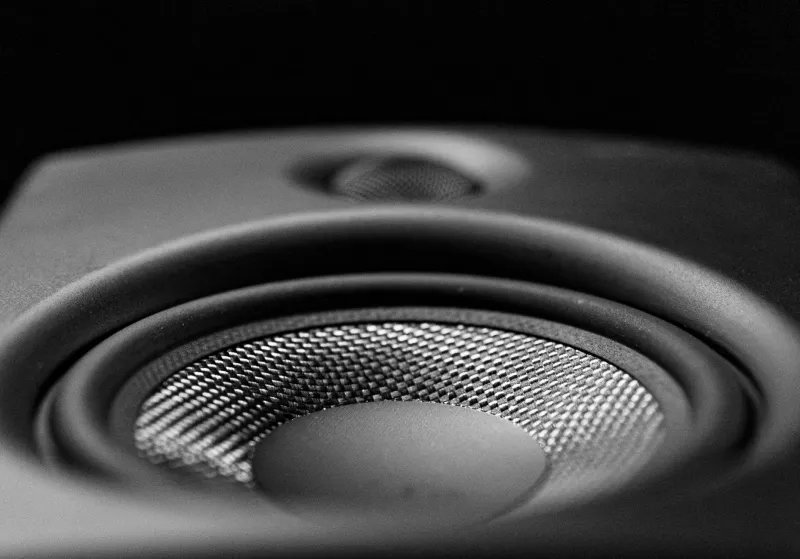
Producers working in this territory tend to be obsessive about the technical side. Building meaningful infrasound requires serious subwoofer rigs — standard club systems don't get anywhere near low enough — and a lot of careful attention to room acoustics, because low-frequency behavior in enclosed spaces is notoriously unpredictable. Bass waves at these lengths can reinforce or cancel each other depending on the geometry of a room, creating what engineers call standing waves: pockets of intense pressure and near-silence that shift based on where you're standing.
Some artists treat this as a feature rather than a bug. Instead of a uniform experience, the audience moves through a landscape of sensation — stepping into a pocket of bone-deep pressure, then out again, the room itself becoming a kind of instrument that plays you differently depending on where you are in it.
The production approach varies. Some producers layer infrasonic content directly into otherwise ambient or drone-based compositions, using the sub-bass as an invisible emotional undertow beneath music that sounds, on the surface, almost meditative. Others build installations designed specifically around the frequency — sparse, minimal, where the infrasound IS the work.
The ethical wrinkle here is obvious: the audience often has no idea what's happening to them.
The Consent Problem Nobody Wants to Talk About
Here's where it gets genuinely complicated. When you go to a loud show, you know you're signing up for loud. When you walk into a haunted house, the whole premise is that you're agreeing to be scared. But infrasound operates below conscious awareness. You can't opt out of a frequency you can't perceive.
Most artists working in this space will tell you that intent matters — that there's a meaningful difference between using sub-bass as a compositional tool to deepen emotional resonance versus deploying it as a psychological weapon to disorient an audience without their knowledge. That distinction is real. It's also genuinely hard to enforce, because the mechanism is identical in both cases.
Some in the experimental sound community argue that all immersive art involves a degree of manipulation — that's kind of the point, that you're engineering a specific perceptual and emotional state in the audience. From that angle, infrasound is just a more direct version of what lighting designers, perfumers, and architects have been doing for centuries.
Others push back hard. There's a difference, they argue, between creating an environment that evokes emotion through conscious aesthetic choices and literally vibrating someone's internal organs to trigger a fear response they can't contextualize or resist. One is art. The other starts to look like something else.
Warehouses, Basements, and the People Doing This Right Now
This isn't happening in concert halls. It's happening in converted warehouses in Detroit and Brooklyn and Los Angeles, in gallery basements in Chicago and Austin, in site-specific installations in rural locations where there are no neighbors to complain about the bass. The community is small, interconnected, and largely off the radar of mainstream music press.
What they're building tends to resist easy categorization. It's not quite music, not quite performance art, not quite sound therapy — though it borrows from all three traditions. There are obvious debts to the long lineage of drone and noise work, to the dark ambient tradition, to the industrial scene's long obsession with physiological impact. But the infrasound focus adds a dimension that those predecessors didn't fully exploit.
The most interesting work in this space tends to be the most honest about what it's doing. The best artists aren't hiding the infrasonic element — they're contextualizing it, giving audiences a framework for understanding what they're experiencing. Some include written materials. Others build the disclosure into the work itself, making the invisible frequency visible through visualization or literal explanation.
That transparency doesn't diminish the effect. If anything, knowing that the dread you're feeling is being generated by a specific frequency, that it's real and physical and not just in your head, makes the whole thing stranger and more profound.
Frequency as Mirror
There's something almost philosophically appropriate about an art form that operates below consciousness. We like to think of ourselves as rational agents making deliberate choices about what moves us emotionally. Infrasound is a pretty blunt reminder that a lot of what we experience as feeling is actually just the body doing what the body does — responding to physical reality in ways the conscious mind has very little say over.
That's not necessarily a dark thought. It's also what makes music work in the first place. The bass drop that hits you in the chest at a show, the reverb that makes a cathedral feel sacred, the specific frequency of a voice that makes you trust or distrust someone before they've finished a sentence — all of it is the body being played like an instrument.
The underground producers working with infrasound are just doing it more explicitly. More honestly, maybe. They're not pretending the emotion is coming from somewhere ineffable. They're showing you the wires.
Whether that makes it more ethical or less is a question the scene hasn't fully worked out yet. But it's the right question to be asking.